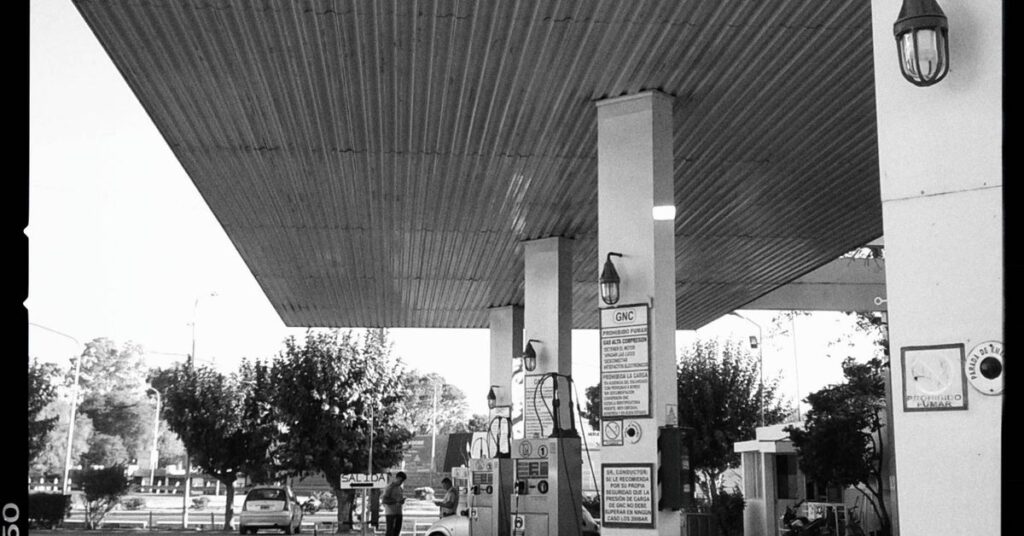
A CNG pump dealership lets you run a compressed natural gas station under the brand of a city gas distribution (CGD) company or a petroleum retail company. You provide land and invest in the station, while the company supplies gas and earns or shares revenue through a fixed margin. Investment commonly runs into crores, and approvals take many months.
CNG works differently from petrol and diesel retail. This guide explains how the business works, what it costs, which models exist and how to apply. For the fuel-retail basics, compare it with our petrol pump dealership article.
Quick answer: To get a CNG pump dealership, check which CGD company serves your area, then apply to that company or its dealer scheme with your land documents, identity proof and a simple business plan. If your site is approved, you sign a dealership agreement, build the station to safety standards, obtain PESO and local approvals, and begin selling. Third-party guides put total investment at roughly ₹1.5 crore to ₹3 crore, with six to twelve months to open.
Key Takeaways
- CNG supply is controlled by authorised city gas distribution companies in each geographic area.
- You usually need to own or lease suitable land on a busy road.
- Investment is typically in crores; verify the cost with the gas company.
- Safety approvals from the explosives and safety authority are compulsory.
- Profit depends on location, traffic and the margin the gas company offers.
How a CNG Pump Dealership Works
A CGD company holds the right to build gas networks in a geographic area. It compresses gas and supplies it to stations. A dealer operates the station on land arranged by the dealer or the company, depending on the model. Customers fuel up, and the dealer earns a margin or fee on each kilogram sold.
Because CNG supply depends on pipelines, mother stations and daughter booster stations, you cannot open a station just anywhere. The gas company decides where its network can reach.
Common Dealer Models
| Model | Who owns the land | Who builds and operates | Typical idea |
|---|---|---|---|
| Dealer-owned, dealer-operated (DODO) | Dealer | Dealer, to company standards | You invest in land and station; the company supplies gas |
| Company-owned, dealer-operated (CODO) | Company | Dealer operates the station | Lower investment; you run the daily business |
| Company-owned, company-operated (COCO) | Company | Company | Not a dealership for you |
| Co-located with a petrol pump | Existing OMC dealer | Existing dealer adds a CNG dispenser | Low-cost entry for current dealers |
Models and terms differ by company and city. Therefore, ask each CGD operator for its current dealer scheme and any advertised locations.
Eligibility and Land
- You are an Indian citizen or a registered Indian entity with the financial strength to fund the station.
- You own or lease land that meets the company’s size, frontage and traffic requirements.
- The site lies inside the company’s authorised area and can reach its pipeline or supply route.
- The land has clear title, correct land-use permission and road access.
- Prior fuel-retail or business experience helps, though it may not be compulsory.
Land decides everythingCheck land use, title and access before you spend on applications. Many sites fail on land alone.
Investment Required
Third-party guides quote a total of about ₹1.5 crore to ₹3 crore for a CNG station, excluding land in some cases. The exact amount depends on the compressor and dispenser capacity, civil work, safety equipment, location and company norms.
| Cost area | What it covers |
|---|---|
| Land | Purchase or lease; the largest cost in cities |
| Civil work | Canopy, forecourt, drainage, office and restrooms |
| Equipment | Dispensers, storage and, for some models, compressors |
| Safety systems | Fire protection, gas detection and earthing |
| Approvals and legal | Licences, NOCs and agreement costs |
| Working capital | Operating cash for salaries, power and payment cycles |
A bank will usually want a full report before it funds the project. See our guide to a detailed project report and the startup loan for a new business article.
Income and Margin: Think in Kilograms
CNG is sold per kilogram. The dealer’s earning per kilogram depends on the company’s scheme, so ask for the exact margin in writing. A rough way to test the business is to multiply daily kilograms sold by the margin per kilogram, then subtract fixed costs.
| Test | How to work it out |
|---|---|
| Gross daily income | Kilograms sold per day × dealer margin per kilogram |
| Monthly gross | Daily income × operating days |
| Fixed costs | Salaries, power, rent or lease, maintenance, insurance and loan EMI |
| Break-even volume | Fixed costs ÷ margin per kilogram |
Run the sums with the break-even point calculator using the margin your company quotes. Do not rely on a generic number from the internet.
Licences and Approvals
| Approval | Purpose |
|---|---|
| Gas company dealership agreement | Authority to sell its CNG |
| PESO licence | Safety licence for storing and dispensing compressed gas |
| District authority NOC | Local safety and land clearance |
| Pollution and environment consent | Where required |
| Fire NOC | Fire safety |
| Local body trade license | Permission to run the business |
| GST registration | Tax compliance |
Learn the local-body step in our guide to the trade license.
How to Apply for a CNG Pump Dealership
- Find which gas distribution company holds authorisation for your area.
- Visit its website or office and ask for dealer or station-partner schemes.
- Identify a suitable site and collect land papers, ID and PAN.
- Prepare a business plan with investment, funding and expected volume.
- Submit the application and wait for the company’s site inspection and feasibility check.
- Sign the dealership agreement on approval.
- Build the station to the company’s design and safety standards.
- Obtain the licences, test the equipment and begin sales.
Be careful about agents who promise guaranteed allotment for a fee. Deal directly with the company and verify any letter at its office.
Risks and Challenges
- Dependence on one supplier: the gas company controls supply and margin.
- High capital: loan EMIs can strain cash flow in slow months.
- Location risk: weak traffic cuts volume quickly.
- Policy and price changes: gas prices and taxes can alter demand.
- Safety duty: strict rules apply, and lapses carry serious consequences.
CNG Pump vs Petrol Pump
| Point | CNG pump | Petrol pump |
|---|---|---|
| Supplier | Authorised city gas distributor | Oil marketing company |
| Selection | Company-specific scheme and site feasibility | Advertised locations with draw or bidding |
| Network dependence | High; needs pipeline or supply route | Lower; road tankers supply fuel |
| Customers | CNG vehicles: autos, taxis, buses, cars | Petrol and diesel vehicles |
| Typical investment | Crores | Tens of lakhs to crores plus land |
If these investments are too large, see lower-capital choices in our guides to low cost business ideas.
FAQs on CNG Pump Dealership
What is a CNG pump dealership?
It is a business arrangement where you run a CNG station supplied by an authorised city gas distribution company, usually under its brand.
How much does a CNG pump dealership cost?
Third-party guides quote about ₹1.5 crore to ₹3 crore. The actual cost depends on land, equipment and the company’s terms.
How do I apply for a CNG pump dealership?
Contact the gas company that serves your area, ask for its dealer scheme, submit your land and ID documents and wait for site approval.
Is land mandatory for a CNG pump?
Most models need land, either yours or the company’s. Check the scheme for the exact rule.
Which licences does a CNG station need?
It needs a company agreement, a PESO safety licence, local NOCs, a fire NOC, a trade license and tax registration.
How long does it take to open a CNG station?
Guides suggest six to twelve months, but timing depends on land, approvals and construction.
Is a CNG pump more profitable than a petrol pump?
Profit depends on location, volume and margin. Compare the investment and margin in writing before you decide.
Can I get a loan for a CNG pump dealership?
Yes. Banks lend against a detailed project report and security, and they test your cash flow carefully.
Check the Gas Network First
Start by confirming that a gas distributor serves your site, then collect the company’s current dealer terms. A CNG pump dealership works only where the network reaches. Next, explore more business idea guides, use the free business tools and visit the Business Reports homepage.
Business Reports is an independent information website. We are not affiliated with, endorsed by or acting for any government department, bank, NBFC, KVIC, NABARD, SIDBI or MUDRA, and we do not provide loans or process applications. Figures are indicative; confirm details on official portals or with your bank. Read our disclaimer and advertising disclosure.