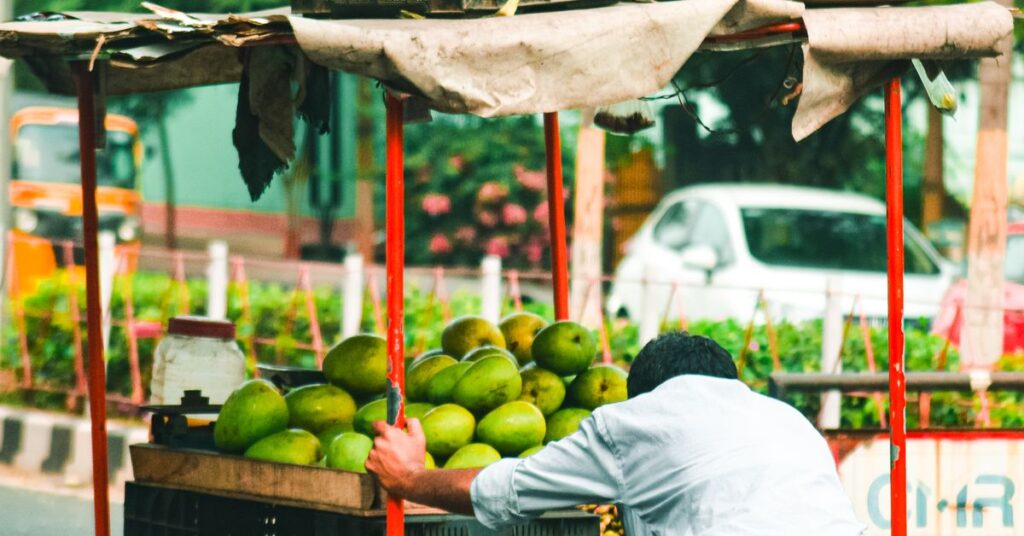
PM SVANidhi is a central government scheme that gives street vendors collateral-free working capital loans. After its 2025 restructuring, vendors can borrow ₹15,000 in the first stage, ₹25,000 in the second and ₹50,000 in the third. Timely repayment earns a 7% interest subsidy and digital-payment cashback. The Ministry of Housing and Urban Affairs runs it, and lending continues until 31 March 2030.
This guide covers the loan stages, eligibility, documents and application steps. In addition, it explains repayment rules and the extra benefits that many vendors miss.
Quick answer: To get a PM SVANidhi loan, you need to be a street vendor with a Letter of Recommendation (LoR), a Certificate of Vending (CoV) or a vendor identity card. Apply on the PM SVANidhi portal or at a bank, microfinance lender or other participating lender. You receive ₹15,000 first, then ₹25,000 and ₹50,000 if you repay on time. There is no collateral and no processing fee.
Key Takeaways
- Loan stages: ₹15,000 for 12 months, ₹25,000 for 18 months and ₹50,000 for 36 months.
- No collateral, no processing fee and no penalty for early repayment.
- Timely repayment earns a 7% interest subsidy, credited quarterly, and digital cashback up to ₹1,600 a year.
- Eligible vendors can also receive a UPI-linked RuPay credit card with a limit that can rise to ₹30,000.
- Proof of vending is essential: an LoR, CoV or ID card issued by the urban local body.
What Is PM SVANidhi?
PM SVANidhi stands for Prime Minister Street Vendor’s AtmaNirbhar Nidhi. The government launched it in 2020 to help street vendors rebuild their businesses after the pandemic. In August 2025, the Cabinet approved a restructured scheme with higher loan amounts and a longer lending period, backed by an outlay of ₹7,332 crore.
The scheme reaches vendors who sell vegetables, fruit, snacks, tea, clothes, footwear, books and services such as barber and cobbler work. The restructured version also covers vendors in census towns and peri-urban areas.
PM SVANidhi Loan Stages
| Stage | Loan amount | Tenure | Monthly principal* | Condition |
|---|---|---|---|---|
| First | ₹15,000 | 12 months | ₹1,250 | Eligible street vendor |
| Second | ₹25,000 | 18 months | ₹1,389 | Repay the first loan on time |
| Third | ₹50,000 | 36 months | ₹1,389 | Repay the second loan on time |
*Principal only, with equal monthly instalments. Interest comes on top, and the 7% subsidy reduces your effective cost if you repay on time.
Benefits of PM SVANidhi
- Collateral-free loan: you pledge no property or guarantee.
- 7% interest subsidy: the government credits it quarterly to your account for timely repayment.
- Digital cashback: you earn up to ₹1,600 a year for digital transactions.
- No processing fee: lenders do not charge one, and prepayment carries no penalty.
- Credit card access: eligible vendors can get a UPI-linked RuPay credit card, with a first limit of ₹10,000 that can rise to ₹30,000.
- Credit history: regular repayment builds a record that unlocks bigger loans.
Why it mattersStreet vendors often borrow from moneylenders at very high daily rates. A low-cost, subsidised loan can therefore save a vendor thousands of rupees a year.
Who Is Eligible for PM SVANidhi?
- You work as a street vendor in an urban area, or in a census town or peri-urban area that the scheme now covers.
- You hold a Letter of Recommendation (LoR) from your urban local body or town vending committee.
- Alternatively, you hold a Certificate of Vending (CoV) or a vendor identity card.
- You are at least 18 years old.
- For the second and third loans, you have repaid the earlier loan on time.
Vendors identified in the municipal survey but without a certificate can still ask the local body for an LoR. Therefore, contact your municipal office first if you have no document.
Documents Needed
| Document | Purpose |
|---|---|
| Certificate of Vending, vendor ID card or Letter of Recommendation | Proves you are a street vendor |
| Aadhaar card | Identity and e-KYC |
| Mobile number linked to Aadhaar | OTP verification |
| Bank account details | Loan credit and subsidy payment |
| Passport-size photograph | Application record |
How to Apply for PM SVANidhi: Step by Step
- Visit the official PM SVANidhi portal or a participating bank, microfinance institution or other lender.
- Choose the option for the loan stage you qualify for.
- Enter your Aadhaar number and complete the OTP verification.
- Give your vending details and upload your LoR, CoV or ID card.
- Select a lender and submit the application.
- The urban local body verifies your vendor status, and the lender checks the file.
- After approval, the lender credits the loan to your bank account.
- Repay each month, and use digital payments to earn cashback.
You can also ask the municipal office or a lender’s branch to help with the form. The application is free, and you should never pay an agent.
How Repayment and the Interest Subsidy Work
You repay in monthly instalments over the loan tenure. Early repayment is allowed without a penalty. The lender charges its normal interest, and the government credits a 7% subsidy to your account every quarter if you repay on time.
As a result, a vendor who pays regularly may bear only a small part of the interest. If you miss instalments, you lose the subsidy and risk being refused the next stage.
Repay on timeA good repayment record moves you from ₹15,000 to ₹25,000 and then ₹50,000. Late payment can block that progress.
PM SVANidhi vs Other Small Loans
| Point | Street vendor scheme | Mudra Shishu |
|---|---|---|
| Target group | Street vendors | Any micro enterprise |
| Loan size | ₹15,000 to ₹50,000 | Up to ₹50,000 |
| Collateral | None | None |
| Interest support | 7% subsidy on timely repayment | No scheme subsidy |
| Proof of vending | Required | Not required |
Larger plans may suit other routes. Read about the Mudra Loan Yojana, the startup loan for a new business and the PM Vishwakarma Yojana for artisans.
Tips for a Smooth Application
- Collect your vending proof first; most delays happen here.
- Link your mobile number to Aadhaar before you apply.
- Use a bank account in your own name and keep it active.
- Accept payments through UPI to earn cashback and build a record.
- Keep a notebook of daily sales so you can show income to the lender.
To check how much a larger loan would cost, use the loan EMI calculator.
FAQs on PM SVANidhi
What is PM SVANidhi?
PM SVANidhi is a central government scheme that gives collateral-free working capital loans to street vendors, with an interest subsidy for timely repayment.
How much loan can I get under PM SVANidhi?
You can get ₹15,000 in the first stage, ₹25,000 in the second and ₹50,000 in the third, provided you repay each loan on time.
Is collateral required for PM SVANidhi?
No. The loans are collateral-free, and lenders do not charge a processing fee.
Who is eligible for PM SVANidhi?
Street vendors aged 18 or above with a Letter of Recommendation, a Certificate of Vending or a vendor identity card are eligible.
How much interest subsidy does PM SVANidhi give?
The government gives a 7% interest subsidy, credited quarterly, for timely repayment.
What is the digital cashback in PM SVANidhi?
Vendors can earn cashback of up to ₹1,600 a year on digital transactions, which encourages UPI use.
Where do I apply for PM SVANidhi?
Apply on the PM SVANidhi portal or at a participating bank, microfinance institution or other lender. Your municipal office can also help.
What if I do not have a vending certificate?
Ask your urban local body for a Letter of Recommendation or a Certificate of Vending. Without proof of vending, the lender cannot process the application.
Take the First Step
If you sell on the street, check your vending proof, link your mobile number and apply for PM SVANidhi’s first ₹15,000 stage. Then repay on time to unlock the next stage. Read more in our loan and scheme guides, try the free business tools and visit the Business Reports homepage.
Business Reports is an independent information website. We are not affiliated with, endorsed by or acting for any government department, bank, NBFC, KVIC, NABARD, SIDBI or MUDRA, and we do not provide loans or process applications. Figures are indicative; confirm details on official portals or with your bank. Read our disclaimer and advertising disclosure.