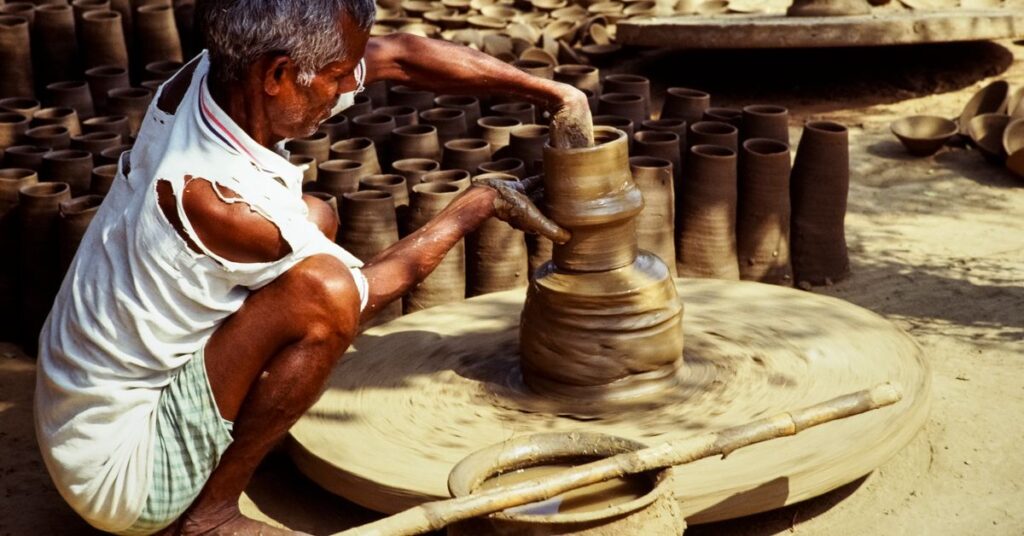
The PM Vishwakarma Yojana is a central government scheme for traditional artisans and craftspeople who work with their hands and tools. It offers collateral-free loans up to ₹3 lakh at a concessional 5% interest rate. It also gives paid skill training, a toolkit incentive of ₹15,000 and a digital ID. The Ministry of MSME launched it on 17 September 2023, and it runs until 2027-28.
This guide explains who qualifies, the 18 trades, the two loan tranches, how to register and what to expect after enrolment. Additionally, it shows EMI examples so you can plan repayment.
Quick answer: Under the PM Vishwakarma Yojana, an eligible artisan in one of 18 traditional trades registers at a Common Service Centre with Aadhaar biometrics. After verification, the artisan gets a PM Vishwakarma certificate and ID card, skill training with a ₹500 daily stipend, a ₹15,000 toolkit e-voucher and collateral-free credit of ₹1 lakh, followed by ₹2 lakh, at 5% interest.
Key Takeaways
- Loan: ₹1 lakh first tranche (18 months) and ₹2 lakh second tranche (30 months), at 5% interest.
- Toolkit incentive of up to ₹15,000 as an e-voucher, linked to basic training.
- Training stipend of ₹500 a day for basic (5–7 days) and advanced (15+ days) courses.
- Open to 18 traditional trades; only one family member can enrol.
- You register through a Common Service Centre using Aadhaar-based biometric authentication.
What Is the PM Vishwakarma Yojana?
The scheme recognises traditional artisans and craftspeople as Vishwakarmas. It aims to improve the quality and reach of their products and link them to domestic and global markets. The outlay is ₹13,000 crore for FY 2023-24 to FY 2027-28.
It differs from a normal Mudra or PMEGP loan, because it combines credit with training, tools, marketing and digital support. Therefore, it suits a village carpenter or a city tailor who needs more than just money. For comparison, read our Mudra Loan Yojana guide.
PM Vishwakarma Yojana Benefits at a Glance
| Benefit | Details |
|---|---|
| Recognition | PM Vishwakarma certificate and ID card |
| Skill training | Basic training of 5–7 days and advanced training of 15 or more days |
| Training stipend | ₹500 per day |
| Toolkit incentive | Up to ₹15,000 as an e-voucher |
| Collateral-free credit | ₹1 lakh first tranche, then ₹2 lakh second tranche |
| Interest rate | 5% for the beneficiary; the government bears the rest through interest subvention |
| Digital incentive | ₹1 per digital transaction, up to 100 transactions a month |
| Marketing support | Quality certification, branding, e-commerce links and publicity |
The 18 Trades Covered
Only artisans in the following trades qualify. They must also practise the trade by hand with tools.
| No. | Trade | No. | Trade |
|---|---|---|---|
| 1 | Carpenter (Suthar) | 10 | Mason (Rajmistri) |
| 2 | Boat maker | 11 | Basket, mat and broom maker or coir weaver |
| 3 | Armourer | 12 | Traditional doll and toy maker |
| 4 | Blacksmith (Lohar) | 13 | Barber (Nai) |
| 5 | Hammer and tool kit maker | 14 | Garland maker (Malakar) |
| 6 | Locksmith | 15 | Washerman (Dhobi) |
| 7 | Goldsmith (Sunar) | 16 | Tailor (Darzi) |
| 8 | Potter (Kumhar) | 17 | Fishing net maker |
| 9 | Sculptor, stone carver and stone breaker | 18 | Cobbler or footwear artisan (Charmkar) |
PM Vishwakarma Yojana Eligibility
- Age of at least 18 years on the date of registration.
- Work in one of the 18 listed trades in the unorganised sector.
- Self-employment, using your own hands and tools.
- No similar credit-linked scheme loan, such as PMEGP, Mudra or PM SVANidhi, in the past five years.
- Only one member of a family can register; family means spouse and unmarried children.
- You are not a government employee, and no family member is a government employee.
Check the loan history ruleIf you took a Mudra, PMEGP or PM SVANidhi loan recently, you may not qualify. Ask the Common Service Centre or your bank to confirm before you register. Rules can change, so check the official PM Vishwakarma portal for the latest conditions.
PM Vishwakarma Loan: Two Tranches Explained
The credit comes in two steps. Clear the first before reaching the second.
| Feature | First tranche | Second tranche |
|---|---|---|
| Amount | Up to ₹1,00,000 | Up to ₹2,00,000 |
| Repayment period | 18 months | 30 months |
| Interest for you | 5% | 5% |
| Collateral | None | None |
| Condition | Enrolment, ID card and verification | Basic training done, standard loan account and regular digital transactions |
EMI examples
At 5% interest, the instalments are small. The table below shows the monthly EMI for each tranche. You can test other amounts in our loan EMI calculator.
| Loan | Tenure | Approx. monthly EMI | Total interest (approx.) |
|---|---|---|---|
| ₹1,00,000 | 18 months | ₹5,778 | ₹4,005 |
| ₹2,00,000 | 30 months | ₹7,106 | ₹13,176 |
Use the first tranche for tools, raw material and a small working capital cushion. Then repay on time, because a clean account is the key to the second tranche.
How to Register for the PM Vishwakarma Yojana
- Visit the nearest Common Service Centre (CSC) with your Aadhaar and the mobile number linked to it.
- The CSC operator enrols you on the PM Vishwakarma portal using Aadhaar-based biometric authentication.
- Fill in your personal details, trade, family details and bank account.
- Upload or share the documents the operator asks for, then submit.
- Your application goes through a three-stage verification: Gram Panchayat or urban local body, District Implementation Committee and Screening Committee.
- After approval, download your certificate and ID card.
- Attend basic skill training, then claim your toolkit e-voucher and apply for the loan through your bank.
Documents you should keep ready
- Aadhaar card with a linked mobile number
- Bank account passbook or cheque leaf
- Ration card or family details for the one-member rule
- Proof of your trade, if the operator asks for it
- Caste or category certificate, where relevant
The Gram Panchayat or ward office verifies your trade, so inform them before applying. Consequently, enrolment moves faster.
Training and Toolkit: What You Get
Training is the core of the scheme, and it is paid. Basic training lasts five to seven days, and advanced training lasts at least 15 days. You earn a stipend of ₹500 a day for attending.
After basic training, you receive a toolkit e-voucher worth up to ₹15,000. You can use it only at approved vendors, and you buy tools for your own trade. Meanwhile, the training itself teaches modern techniques, design, safety and basic business skills.
PM Vishwakarma Yojana vs Mudra vs PMEGP
| Point | PM Vishwakarma Yojana | Mudra loan | PMEGP |
|---|---|---|---|
| For whom | Traditional artisans in 18 trades | Any micro business | New units in any activity |
| Maximum credit | ₹3 lakh in two tranches | Up to ₹20 lakh | Projects up to ₹50 lakh |
| Interest for borrower | 5% | Bank rate | Bank rate |
| Subsidy or incentive | Toolkit ₹15,000 and training stipend | None | 15% to 35% subsidy |
| Training | Included and paid | Not required | EDP compulsory |
If you outgrow the ₹3 lakh limit later, you can explore a PMEGP loan for a new unit, or a CGTMSE-backed loan after reading about the CGTMSE scheme. Remember that PMEGP and Mudra history can affect eligibility, so plan the order carefully.
Worked Example: A Village Carpenter Under the PM Vishwakarma Yojana
Consider Ramesh, a carpenter in a small town who works with basic hand tools and earns about ₹15,000 a month. He registers at a CSC and passes verification. Then he completes basic training and earns ₹500 a day for the training period.
| Step | What Ramesh gets | How he uses it |
|---|---|---|
| Enrolment | Certificate and ID card | Shows banks and buyers that he is a recognised artisan |
| Basic training | ₹500 a day stipend, new techniques | Learns safer tools and better finishing |
| Toolkit voucher | Up to ₹15,000 | Buys a power planer, drill and measuring tools |
| First tranche | ₹1,00,000 at 5% | Buys timber and takes larger furniture orders |
| Repayment | About ₹5,778 a month for 18 months | Pays through UPI to build a clean record |
| Second tranche | ₹2,00,000 at 5% | Adds a small workshop machine and hires one helper |
Ramesh pays only a small monthly amount, and his income rises with better tools. As a result, he moves from piece-rate work to taking his own orders. His story shows why the training, the toolkit and the loan work best together.
How Banks Treat PM Vishwakarma Loans
Banks and eligible lenders sanction the loans, but the portal shares your verified data with them. Hence, you do not need to prepare a long project report. Even so, a simple note on how you will use the money helps the branch officer.
- Visit the branch your account is linked to, and carry the certificate and ID card.
- Explain what tools or material you will buy with the first tranche.
- Ask the officer to confirm the repayment schedule in writing.
- Never pay anyone to speed up your loan; the scheme has no agent fees.
Tips to Make the Most of the Scheme
- Enrol early: verification takes time, and training batches fill up.
- Use the toolkit well: buy tools that raise your output or quality.
- Go digital: accept UPI payments. It earns the ₹1 incentive and helps unlock the second tranche.
- Keep records: note daily sales and costs, since banks look at them for repayment.
- Register on Udyam: it formalises your business and helps later loans.
A free Udyam certificate takes minutes. Follow our guide on MSME registration online. Once your brand grows, consider trademark registration to protect your name, and read startup loan for new business options for bigger plans.
Existing SBI customers who need a small loan quickly can also check the SBI e Mudra loan route. However, check how it interacts with your PM Vishwakarma eligibility first.
Common Problems and Fixes
| Problem | Likely cause | What to do |
|---|---|---|
| Biometric authentication fails | Worn fingerprints or Aadhaar mismatch | Update Aadhaar biometrics or ask the CSC to retry with iris |
| Application stuck at verification | Gram Panchayat or ward has not verified | Visit the office with your application number |
| Loan not sanctioned | Bank cites loan history or documents | Ask the bank for the reason and fix the gap |
| Toolkit voucher not working | Basic training not completed | Complete training and check with the training centre |
| Second tranche refused | First loan not regular or no digital use | Repay on time and use UPI regularly |
FAQs on PM Vishwakarma Yojana
What is the PM Vishwakarma Yojana loan amount?
Eligible artisans can get collateral-free credit up to ₹3 lakh in two tranches: ₹1 lakh for 18 months, then ₹2 lakh for 30 months, at 5% interest.
What is the interest rate under PM Vishwakarma?
Beneficiaries pay a concessional 5% interest. The government bears the balance of the lender’s rate through interest subvention.
How much is the PM Vishwakarma toolkit?
The toolkit incentive is up to ₹15,000, given as an e-voucher after basic skill training. You can use it to buy tools for your trade.
Who is eligible for the PM Vishwakarma Yojana?
Artisans aged 18 or above in one of the 18 listed traditional trades, working with hands and tools. One family member can enrol, and government employees are not eligible.
How do I apply for the PM Vishwakarma Yojana?
Register at a Common Service Centre with Aadhaar-based biometric authentication, complete verification, then apply for training, the toolkit and the loan.
Is there a training stipend?
Yes. You get ₹500 per day during basic and advanced skill training.
Is collateral needed for the PM Vishwakarma loan?
No. The loan is collateral-free, and the government covers the credit guarantee.
Can I take a Mudra loan and a PM Vishwakarma loan together?
Eligibility rules bar those who recently took similar credit-linked scheme loans, so check with your bank first. Rules can change, so confirm on the official portal.
Is the PM Vishwakarma Yojana Right for You?
If you practise one of the 18 trades, the PM Vishwakarma Yojana gives you cheap credit, paid training and a toolkit in one package. Register through a Common Service Centre, attend training, use the loan for tools and repay on time.
Plan repayment with the EMI calculator, browse our loan and scheme guides, explore the free business tools and visit the Business Reports homepage.
Business Reports is an independent information website. We are not affiliated with, endorsed by or acting for any government department, bank, NBFC, KVIC, NABARD, SIDBI or MUDRA, and we do not provide loans or process applications. Figures are indicative; confirm details on official portals or with your bank. Read our disclaimer and advertising disclosure.